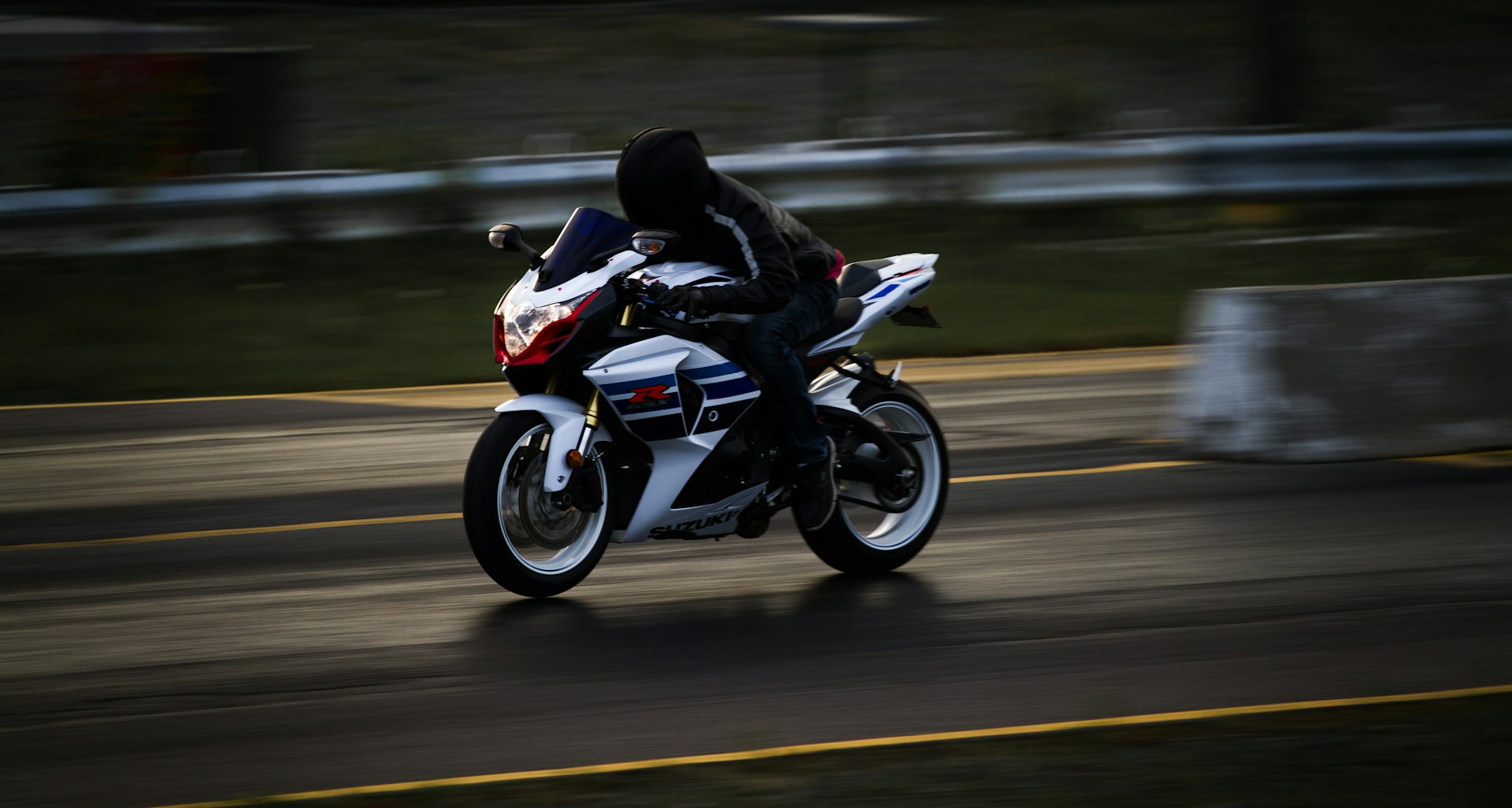
We shipped something this week that we’re genuinely excited about — and a little nervous. It’s the kind of feature that could make someone’s ride feel understood, or it could make them raise an eyebrow and say “that’s not how I ride at all.” Either way, we want your feedback.
What We Built: Aggro Labels
Since the beginning, RideRunner has been quietly collecting sensor data during your rides — lean angle, braking force, acceleration bursts, corner intensity. Until now, that data sat behind a toggle called “Aggro Mode” that just showed you live visual feedback. Useful, but not exactly insightful.
Now, at the end of every ride, the app reads that data and gives you a label — a riding style fingerprint. Cannonball Run. Smooth Operator. Twisties Specialist. Ten labels in total, each one describing how you rode, not just where you went.
More importantly, it writes you a short paragraph. Coaching tips. Observations. Things to try on your next ride. All generated instantly on your phone — no server, no AI, no internet required.
How It Works (Without Getting Too Nerdy)
Your phone’s sensors are surprisingly capable. The accelerometer measures G-forces in three directions — forward/back (acceleration and braking), side-to-side (cornering), and up/down. We sample this at a high rate throughout your ride and classify each moment into states: accelerating, braking, turning left, turning right, or taking a hard corner.
From those states, we calculate percentages and counts. What fraction of your ride was spent cornering? How many hard braking events per hour? How many acceleration bursts versus turns? These numbers form a profile, and that profile gets matched against ten templates we designed.
The templates are ordered — most specific first, most general last. If you had five or more hard corners with heavy braking on a twisty road, you’re a Cannonball Run. If you had barely any aggression at all and fewer than ten turns, you’re a Sunday Cruise. If nothing else fits, you’re a Balanced Ride. There’s no mystery — the rules are deterministic, not a black box.
The Ten Labels
Here’s the full set, and roughly what triggers each one:
- Cannonball Run — Sustained hard cornering, heavy braking, lots of twisty-road time. You’re pushing hard.
- Twisties Specialist — Over 30% of your ride spent cornering with ten or more turns. Proper bend-hunting.
- Sprint Rider — Lots of hard acceleration bursts, very few turns. Straight-line speed.
- Heavy on the Brakes — More braking events than turns. You’re scrubbing speed harder than you need to.
- Full Send — High aggression across the board. Braking, accelerating, and cornering all at pace.
- Smooth Operator — Under 3% aggressive time. Butter-smooth, efficient riding.
- Corner Enthusiast — Lots of turns with very little hard braking or acceleration. Flowing, rhythmic riding.
- Hard Corner Hunter — Over 40% of your turns were hard corners. You seek out challenging bends.
- Sunday Cruise — Low aggression, under ten turns. Recovery ride or commuter pace.
- Balanced Ride — The catch-all. A bit of everything, nothing dominating.
Why We Built It This Way
We could have used AI. It’s 2026 — every app is shoving a chatbot somewhere. But we deliberately chose a rule-based system instead.
Here’s why: we wanted the labels to be explainable. If the app says you’re a Heavy on the Brakes, you should be able to look at your stats and see exactly why — you had more braking events than turns. No mystery model hallucinating a label because it read something vaguely similar in its training data. Just maths.
It also runs entirely on your phone. No sending your ride data to a server. No waiting for a response. No internet connection needed. Your ride stats never leave your device.
What We’re Nervous About
Ten labels is a lot. Ten labels is also nowhere near enough to describe the infinite variety of how people ride motorcycles. You might get “Sprint Rider” on a ride that felt like a gentle cruise to you. You might get “Cannonball Run” when you were just keeping up with a faster group.
Labels can feel reductive. They can feel wrong. And when an app tells a motorcyclist how they ride, the bar for accuracy is high — riders know their own riding better than any algorithm ever will.
We’re sharing this early, before it’s perfect, because we want your calibration. We want to know which labels resonate and which ones miss. We want to know if the coaching tips are actually useful or just noise. This is a first pass, not the finished article.
A Note on Safety
If you want to test how the labels respond to your riding — try different corner speeds, experiment with smoother braking, see what triggers Cannonball versus Twisties Specialist — please do it somewhere safe. An empty car park. A quiet industrial estate on a Sunday. A private road. Not public roads with traffic, and definitely not at ten-tenths pace.
These labels are meant to be fun and occasionally insightful. They are not a score. They are not a leaderboard. Ride within your limits, always.
Tell Us What You Think
Go for a ride. Check your label. Read the paragraph. Then tell us:
- Did the label match how the ride felt to you?
- Was the coaching advice actually useful, or just obvious?
- Are there riding styles we’re completely missing?
- Would you want to share your label with friends — or is that too personal?
Reply to this post, DM us, or hit us up wherever you found this. We read everything.
Next up: we’re exploring whether these labels should be visible to your ride group, like post-ride badges. But we want to hear from you before we build that. Until then — ride safe, and let us know what the app says about your cornering.